
When Is the Best Time of Year to Marry on Tamborine Mountain?
The short answer: Tamborine Mountain can be beautiful in every season. Its elevation and subtropical mountain environment give each part of the year a distinct mood, so the best date is the one that matches how you want your celebration to feel—not a single universally perfect month.
What the climate records tell us
Long-term Bureau of Meteorology records from the Mount Tamborine Fern Street station, at an elevation of 515 metres, show why the mountain feels distinct from the coast below. The figures that follow are monthly climate averages rather than a forecast for any particular wedding day. Mountain weather can still bring mist, showers, cool changes and brilliant sunshine in every season.
Spring: fresh growth and garden energy
From September to November, the average monthly maximum rises from about 20°C to 25°C, while average minimums rise from about 10°C to 15°C. Mean monthly rainfall ranges from approximately 58 mm in September to 122 mm in November.
At Shambala, spring brings fresh garden growth, soft colour and increasing daylight. Sunset moves from roughly 5.35 pm at the beginning of September towards 6.30 pm by the end of November, creating more room for an outdoor ceremony, garden portraits and pre-reception drinks. A clear wet-weather alternative remains important because conditions on the mountain can change quickly.
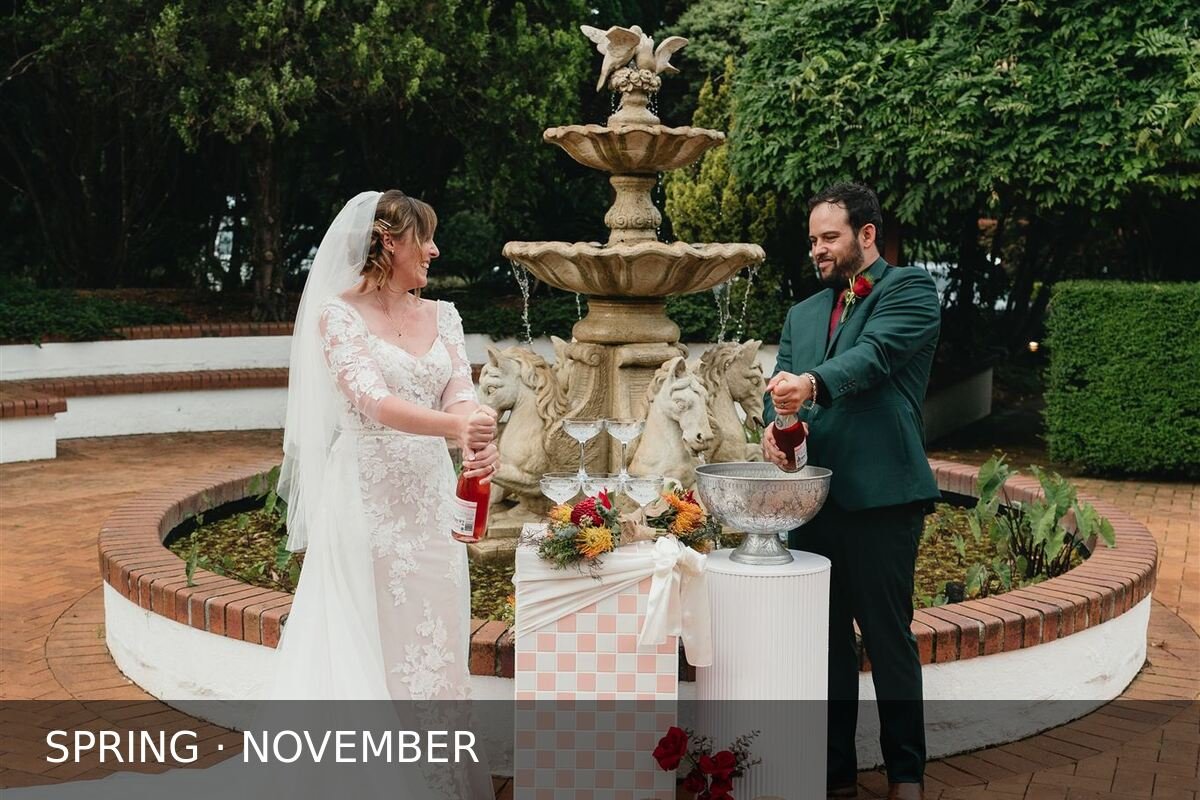
Spring wedding at Shambala Estate in November, with Megan and Nick celebrating beside the Atrium fountain.
Summer: lush and atmospheric
From December to February, average monthly maximums sit around 25–26°C and average minimums around 16–17°C. These are also the wetter months, with mean monthly rainfall of approximately 166–224 mm.
Summer brings the rainforest and gardens vividly to life. The latest sunsets of the year approach 6.50 pm, which can support a later ceremony and extended garden photography. For Shambala weddings, summer planning places particular emphasis on shade, hydration, guest comfort and a calm response to passing showers. The mountain setting is generally cooler than Brisbane or the Gold Coast below, but formal clothing and outdoor gatherings still need thoughtful timing.
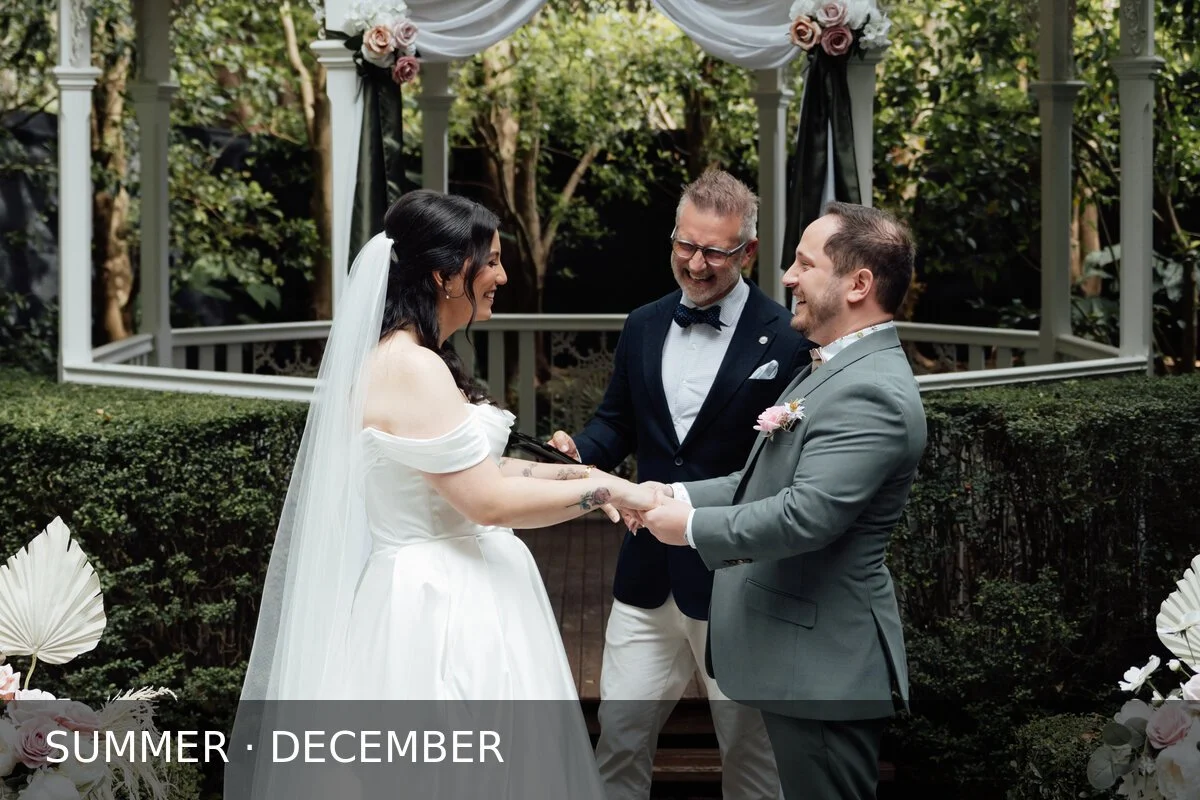
Summer wedding at Shambala Estate in December, with Esra and James exchanging vows at the garden Gazebo.
Autumn: warm light and comfortable gatherings
Across March to May, the average monthly maximum eases from about 24°C to 20°C, while average minimums move from about 16°C to 11°C. Mean monthly rainfall also generally reduces, from approximately 204 mm in March to 125 mm in May.
Autumn often suits couples who want garden beauty with a cooler feel and warm, gentle light. Sunset becomes progressively earlier—from around 6.15 pm in early March towards 5.00 pm in late May—so we work backwards from the desired portrait light when shaping the ceremony and reception timeline. A comfortable layer for guests becomes increasingly useful as the season progresses.
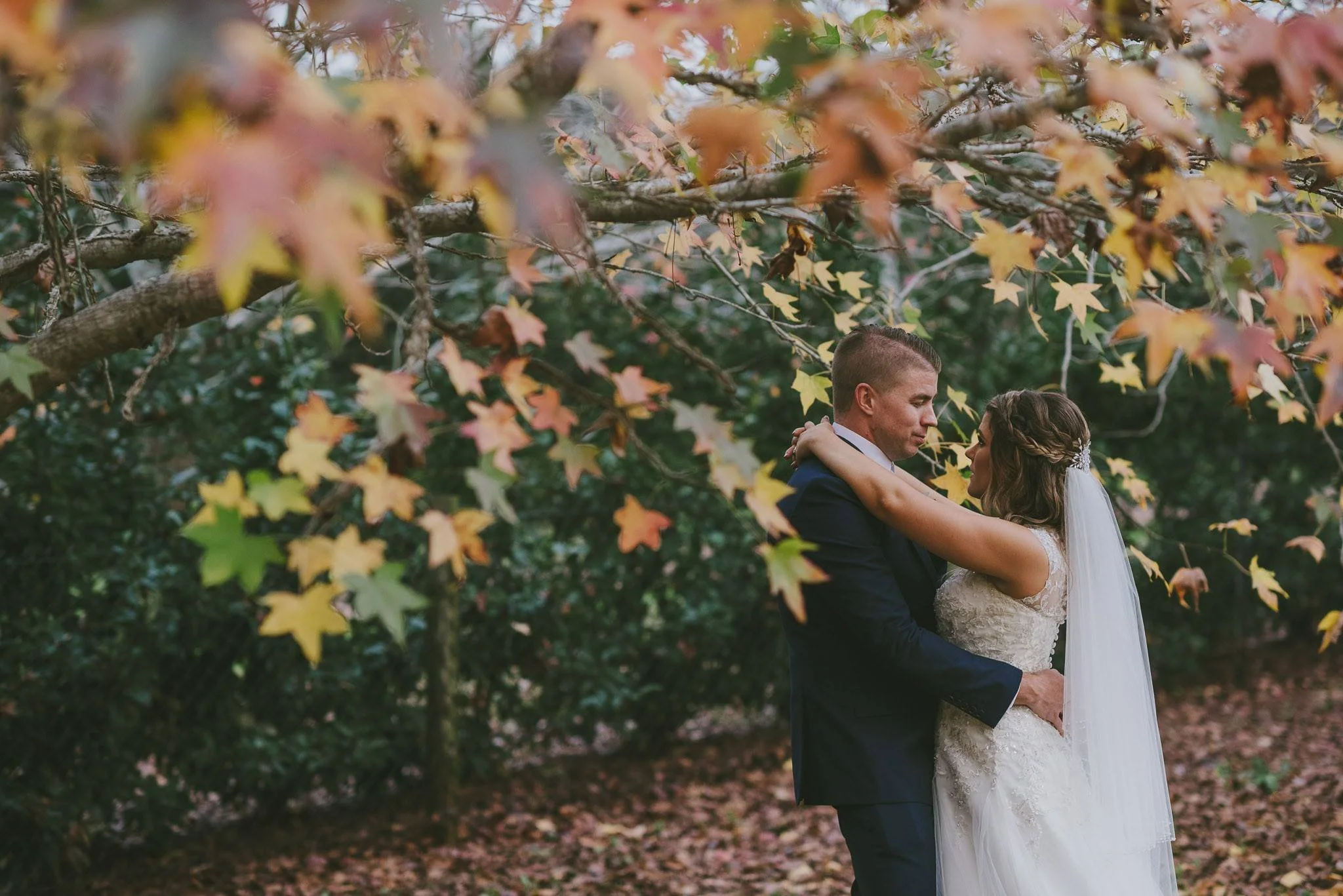
An autumn wedding portrait beneath the changing leaves in the estate gardens.
Winter: clear, intimate and romantic
From June to August, average monthly maximums are around 17–18°C and average minimums around 8–9°C. Mean monthly rainfall is lower, at approximately 55–95 mm, and the long-term records show more clear days in winter than in the wetter summer months.
Winter weddings on the mountain can feel crisp, intimate and wonderfully atmospheric. Sunset is close to 5.00 pm around midwinter and moves towards 5.30 pm by late August, so ceremony and photography timing needs to be deliberate. At Shambala, fireplaces, candlelight, warm food and indoor reception spaces come into their own, while guests appreciate clear advice to bring a jacket for the evening.
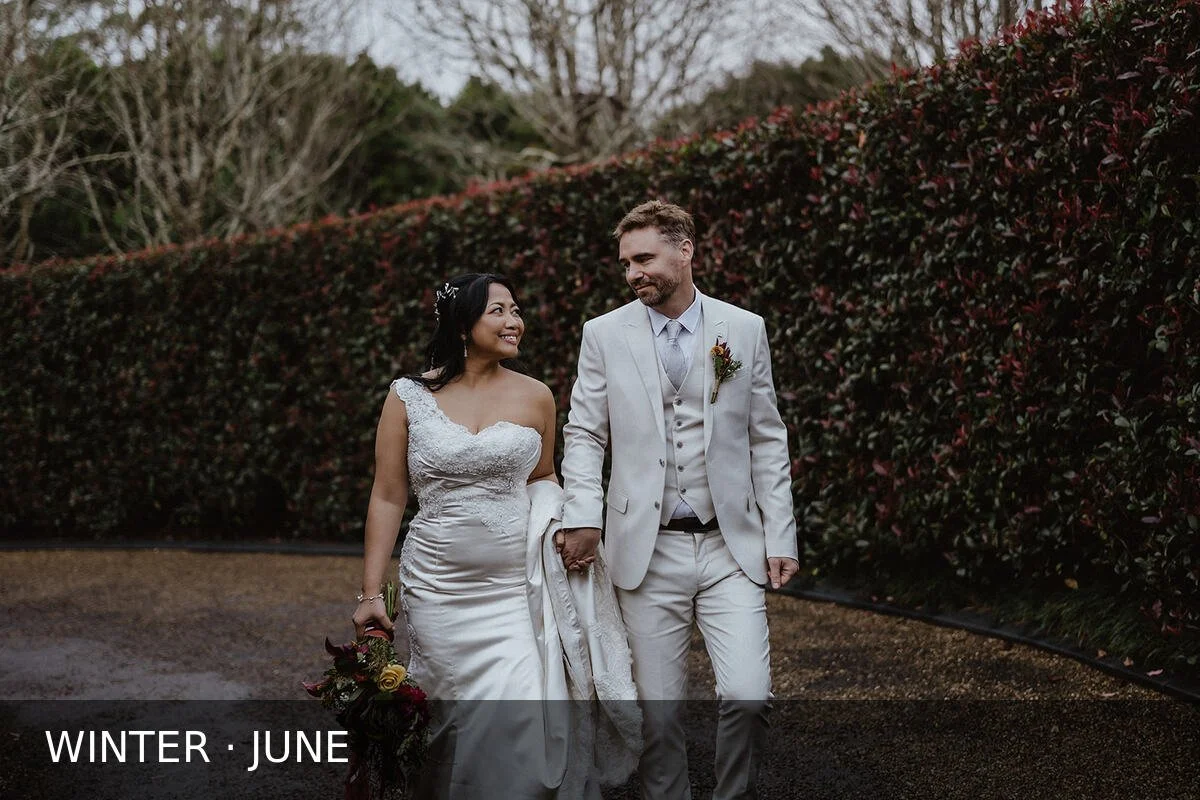
Winter wedding at Shambala Estate in June, with Donna and Greg among the deeper winter garden tones.
What the mountain microclimate means
Climate averages are useful for planning, but they are not promises. Tamborine Mountain can feel different from the coast below, and the conditions can shift during the day. That is not a reason to avoid a season; it is a reason to choose a venue with genuine flexibility and a team that watches the forecast carefully.
At Shambala Estate, the Atrium, Gazebo and Waterfall Grotto are open-air ceremony settings, while the Chapel provides an indoor option. Two reception spaces allow the celebration to continue comfortably whatever the mountain weather brings. The aim is not to promise an unchanging day. It is to make sure your wedding remains beautiful when the mountain behaves like a mountain.
Choose by feeling, then plan well
Ask yourselves what matters most: long garden light, lush rainforest, cooler air, candlelit warmth or a particular anniversary date. Then consider guest comfort, photography light, accommodation demand and the wet-weather plan.
The Shambala way is practical and calm. We listen before we create, explain the trade-offs honestly and find the setting and flow that best support your priorities.
Climate source: Bureau of Meteorology climate statistics for Mount Tamborine Fern Street. Sunset times are approximate and vary by date.
For a glimpse of the feathered visitors, watchful wildlife and birdsong that bring the gardens to life, explore Nature’s Calling at Shambala.
Continue exploring
Ceremony locations · Reception spaces · Accommodation · Wet-weather planning
Experience Shambala Estate for yourself
Visit the Estate in the season you are considering and imagine how the gardens, rainforest and spaces could feel on your day.